

Showing posts with label life lesson. Show all posts
Showing posts with label life lesson. Show all posts
Friday, 22 February 2019

Sunday, 9 December 2018
Choosing a Path

"You know," he said "I'd like you to pace yourself." Intrigued by his words, I stopped reading to eavesdrop and heard as he told her, "You're doing too good a job. You don't need to work this hard." "I like my area clean and looking good for everyone," she said, confused by his direction. "Anyway, I get all my work done."
When they parted several minutes later, her body language was not one of relief, but despair. Clearly a person taking pride in her work, the boss's unfolding message was not about a perfectionist who didn't get her work completed, but someone setting the standard too high for everyone else.
It reminded me of a young man who approach me after a conference speech. He told me he was doing well at work and was up for promotion. But it bothered him that his friends weren't progressing too, and the dynamics between them had shifted. Conflicted about leaving his teammates behind, he wasn't sure about the promotion.
There are two choices to your work. You can fit in and stay comfortably in the pack, nourished by mediocre sameness where your gifts and talents may remain on life's unfilled-potential-shelf for fear of out-shining or outperforming those you work with; or you can realize people are not the same and show up as who you are.
People who are winning at working choose the second path. As they do, they raise the bar for all of us. They push us, challenge us, and inspire us to show up with our passions, skills, abilities and dreams. They have the courage to shine, and their modeling encourages us to bring our own gifts to this challenging world.
For people who are winning at working, their work is about becoming who they are capable of becoming, and they help others do the same.
Your talents are different from mine which are different from his and from hers. You do some things better than others; others do some things better than you. And the powerful, and exciting part is this: when we use our individual differences we collectively shine.
I hope that housekeeper keeps her passion alive and her vision of a comfortable, inviting, clean respite for the weary traveler, a standard for herself. If she does, others will follow her uncommon self-leadership.
I hope that young man embraces his promotion, realizing sometimes friends change; or sometimes we best help our friends and those that we love achieve their dreams, by achieving our own.
Stress
Thursday, 2 August 2018
How Women Can Negotiate Like Pros

There are some stereotypes that women cannot negotiate as well as men: that women are not as aggressive, that they take things too personally, or that they are not taken seriously. As a woman negotiator myself, I believe that the same rules apply to men as woman. However I have listed five rules that should particularly help women Negotiate Like A Pro.
1. It Does Not Hurt To Ask. If You Don’t Ask, You Don’t Get.
It does not hurt to ask for something. The worst that can happen is that the other party says no. This is true in any kind of negotiation especially in dealing with a boss. Ask for that raise or promotion. Even if you don’t get it, your boss may admire your pluck and keep you in mind for future promotions. If there is something very important to you, it is good to get it out on the table. However do your research and be prepared to defend what it is you want and why you should get it. Don’t think that if you deserve a raise or promotion you will get it without initiating the conversation. In a job offer, try asking for more money and see what happens. If you have a bad customer experience at a hotel, ask for something like an upgrade or a free night. The results may surprise you.
2. Never Take No For An Answer
If you ask for something you really want and it is denied, don’t take no for an answer. Try to find out why they are saying “no”. As they say, there is more than one way to skin a cat. Try to think of a different way to convince the other side to give you want you want. Go back to the drawing board and try to ask for what you want in a different way. Even a minor change, a compromise or rephrasing might make it more palatable. If this is an important issue, suggest a trade-off or package deal, so the other side might be motivated by getting something they want.
3. Look the Part
You are the one who should set the tone of the negotiation. When you come into the room for the first time, you should look the part. You should wear professional clothes. A woman should not wear a lot of distracting jewelry. Bring the accessories of success such as a nice briefcase and notebook. Project the image that you want. You might want to try it in the mirror a few times. You want to give good eye contact and be a good listener. You want to seem knowledgeable about the issues or issues to be discussed. Think of the expression, “Fake it till you make it.” Being a good negotiator is like being a good actor. Remember to play your part and look the part.
4. Never Let Them See You Sweat
It is important to check your emotions at the door before trying to negotiate anything. Emotions such as anger can make one lose control. If you are nervous, upset or unsure of yourself, you need to focus on what you hope to accomplish and tell yourself that nothing is going to stand in the way of your goal. If the other side sees weakness, they may try to bait you, so don’t give them the satisfaction of knowing they have gotten to you. When I am upset with the other side, instead of getting angry, I actually speak more softly and more slowly to get my message across. Don’t let your emotions interfere with the negotiation and never let them see you sweat!
5. Be Prepared
Like the Girls Scouts, you must be prepared. If women feel they are not always taken seriously, they may have to work extra hard to do their research and be prepared. Much preliminary work must be done. If you are not completely prepared, consider delaying the start of the negotiation. If you try to wing it, you will regret it. It is important to have all the answers in advance. You cannot be over-prepared.
If you follow these Rules, you should be able to Negotiate Like A Pro.
Source
Sunday, 29 April 2018
Why Is it So Hard for You to Say "Thank You" When You Get a Compliment?

While most of us are proud of ourselves when we do something awesome, we’re not so great at sharing that excitement with others.
Because who wants to come across as egotistical or cocky?
Certainly not I.
But we also know that there’s nothing wrong with being proud of your accomplishments.
So I have a challenge for you this week (or month, if you’re feeling ballsy), inspired by Feminist Fight Club’s recent newsletter: Try accepting a compliment without explaining yourself.
How so? As the newsletter describes, this means not adding on a “It wasn’t a big deal” or “I didn’t do it alone” or any other excuse after saying “Thank you.” Just say thanks and leave it at that.
Take this common exchange as an example:
Your co-worker says: “Nice job on that presentation today!”
What you’d normally say: “Thanks, but it was really a team effort.”
What you should say: “Thanks!”
I know, this sounds hard—we all want to give the impression that we’re modest team players just checking things off our to-do list for the good of the world. But as Feminist Fight Club points out, this is an important way to practice self-care. And that’s because studies show that accepting compliments helps to boost your self-confidence and performance.
Who knew feeling better about yourself and getting ahead at work was as simple as saying, “Thank you”?
Science aside, don’t you want (and deserve) to get credit for all your hard work and effort? The more you brush it off as “nothing,” the more you give away your own worth.
Don’t do that! Stand proud when you did a good job. And pass the good feelings along by recognizing others who do the same.
If we all took more ownership of our achievements and supported each other’s strengths, the workplace would be a much more enjoyable and uplifting place to be.
Source
Monday, 26 March 2018
How to Be Happy With the Life You Have Right Now

More, more, more.
More money. A better job title. A bigger house. A nicer wardrobe. We all want more. It’s human nature, really. Even if you aren’t a restless perfectionist who’s constantly trying to push herself to the next level (I’m blushing and putting my face down on my desk over here), most of us usually aren’t willing to completely stagnate. We all have at least some desire to keep moving forward.
But, let’s face it—living our lives with a ceaseless yearning to constantly get our greedy little paws on more (whether that’s money, fame, or success) can be downright draining. And, if you want to feel even the least bit content on a daily basis, you need to learn to go against the grain and be happy with—gasp!—less.
No, I’m not saying that you need to sell your home, keep only one pair of shoes, and live an extreme minimalist life in a 20-foot trailer (although, more power to you if that sounds like your jam!). However, there’s a lot to be said for finding happiness right where you are—rather than being so obsessed with where you’re going.
Easier said than done, right? Believe me, I’m right there with you. But, learning to feel satisfied with what you already have is definitely doable—it just takes a little conscious thought.
1. Stop Falling Into the Comparison Trap
All too often, I find myself chasing after something not because I actually want it, but because I feel like I should have it. Why? Well, because other people have it.Comparison has become all too easy today. Like everybody else, I’ll blame that on social media. One minute, I’ll feel accomplished and successful in my career—until I log into LinkedIn and see that a colleague was recently published by The New York Times. I have zero complaints about my cute little house—until I see that one of my Facebook friends has just purchased this ridiculously gorgeous home on a giant wooded lot.
See how easy that trap is to fall into? I won’t even bother getting up on my high horse and preaching to you about this one, because I compare myself to others more frequently than I’d even care to admit—it’s natural.
But, it’s important to remember that someone else’s success isn’t your failure. And, beyond that, you don’t have to have (or even want) everything that other person already has within her grasp. You’re different people with different lives. So, do your best to stay focused on your own path, and forget the rest. In the end, what everyone else is doing has little to no impact on your own success and happiness.
2. Think About Your Reasoning
Ultimately, there’s nothing wrong with seeking improvement—as long as you have legitimate reasons for doing so. Maybe you want a better job because your current one makes you absolutely miserable. Perhaps you’re chasing after more money, because you find that your family is strapped for cash month after month. Those desires to be better can actually be motivating, and that’s a good thing!But, if the only reasoning behind your longings are, “I just want it,” you’ve got a little more thinking to do. So, take a magnifying glass to your yearnings to amass more, and determine what exactly is feeding those desires.
If you find that you actually have solid justifications for why you simply can’t feel content and settled with your current circumstances? Well, you’ve lust landed on some awesome inspiration to keep moving forward. However, in contrast, if you discover that you’re only chasing your tail and driving yourself crazy for the sake of bragging rights or keeping up with the Joneses? You know you need to reevaluate and focus your attention on being happy with what you already have.
3. End Each Day Feeling Grateful
“Be happy with what I have?” you’re likely thinking now, “OK, that sounds great, but how exactly do I do that? That’s the hard part!”You’re right. That is the hard part. And, I’m going to resist the temptation to spout out a bunch of those cliché, “It’s about the journey, not the destination” lines at you. This isn’t a high school commencement speech, after all.
But, do you know why that advice is so popular? Because it’s true. Oftentimes, we can be so laser-focused on what we want, we totally neglect to appreciate what we have. Don’t feel guilty—we all fall victim to this ungrateful attitude.
So, what do I do to try to combat that? Every night, I think of five things from that day that I’m grateful for. Whether it’s my family (my husband and my dog usually end up somewhere close to the top of that list) or a great accomplishment from that workday, I spend some time reflecting on all of the things that made me crack a smile.
It might all sound a little to mushy to you—and I can’t blame you there. But, I promise, it works. This technique pulls your attention off of all of those things that you don’t have and those slipups that didn’t go quite right throughout the day, and instead makes you remember all of the things (both big and small!) that you should appreciate.
Instead of falling asleep obsessing over the career trajectory of my college roommate’s friend, I rest easy thinking about all of the positives in my life. Dozing off while remembering how adorable my dog is? Well, there’s no better way to end the day.
We all want more. And, to some extent, that’s a good thing. But, if you spend every spare moment only thinking about all of the things you don’t have yet, you’re setting yourself up for a life of stress and discontentment.
It’s important to learn to be happy with what you have right now. And, as you now realize, that’s totally possible. Use these tips to feel pleased with where you are at the moment, and you’re sure to feel more satisfied, more fulfilled, and more accomplished on a daily basis. That’s right, you can actually have more with less.
Source
Monday, 19 March 2018
3 Valuable Strategies for Practicing Self-Respect

In 1961, author Joan Didion, then a 26-year-old Vogue editor, penned a seminal essay for the magazine titled, “Self-Respect: Its Source, Its Power.” In it she wrote, “To live without self-respect is to lie awake some night, beyond the reach of warm milk, phenobarbital and the sleeping hand on the coverlet, counting up the sins of commission and omission, the trusts betrayed, the promises subtly broken, the gifts irrevocably wasted through sloth or cowardice or carelessness.”
Full disclosure: We gave a passing thought to the idea of just reprinting Didion’s essay. How can we write on a topic for which the last word was said more than half a century ago?
Of course, that doubt itself doesn’t display much self-respect. But falling short of Didion’s prose doesn’t make our magazine any less valued. And knowing that is healthy in and of itself.
Accepting one’s failings, rather than being tortured by them, is a self-respect starting point. Appreciating your intrinsic value is “a discipline, a habit of mind that can never be faked but can be developed, trained, coaxed forth,” Didion wrote.
1. You are a good person!
That statement, or whatever best suits you, is what you should tell yourself in the mirror every day. You might feel silly doing so, but the effect of positive self-talk is far from foolish. One 2015 study of 2,400 adolescents (who are no doubt in peak esteem-precarious years) found that self-compassion offsets the negative effects of low self-esteem, which include, according to other studies, depression and anxiety. Self-compassion, the study’s researchers wrote, “involves accepting self-doubt, negative self-evaluations and adversity as part of the human condition,” as well as simply being kind to yourself.Remind yourself of your strengths daily. You’re a good parent. Or maybe you tell the best stories. So what if you’re awkward in social situations or not as talented of a cook as you’d like to be? No one is perfect, and it’s our imperfections—and self-improvement journeys—that make us so fascinating.
2. It doesn’t matter if other people don’t agree.
“The dismal fact is that self-respect has nothing to do with the approval of others,” Didion wrote. Research has borne out her conclusion. A sense of self-worth built by and dependent upon the opinions of other people—conditional self-esteem—is a house of cards, liable to collapse at any moment.Social media has made conditional self-esteem an even bigger trap than when Didion was a young woman. A 2014 study from the University of Houston found that the more time people spend on Facebook, the more depressive symptoms they have. Why? The social comparisons these platforms rely upon—Who takes the most vacations? Whose kids are the most successful?—cause us to focus on our conditional, rather than our actual self-worth.
3. Identify your core values.
Limiting comparisons (to famous authors or otherwise) doesn’t solve the root problem of conditional self-worth, though. Valuing yourself for who you are—and not who you think you should be—is not easy. It helps to find a therapist who can help you work through your own self-confidence roadblocks. But one way to start is by figuring out what you truly value. Self-esteem comes when you’re living a life that’s aligned with your values.Source
Friday, 9 March 2018
How to Access the Power of Ambition

What is the origin of true ambition? There exists really only one place to find true ambition, and that is within you—in every thought, in every movement, in every motivation. Your ambition is an expression of who you truly are, your own self-expression.
Ambition says, I know who I am and I know where I want to go. I’m accumulating knowledge and experiences and feelings and philosophies that will help prepare me for opportunities that I know will show up without notice or any help on my part. Because you know where you want to go, you have already been working on the parts of your personality that will make you better. Working on your attitude, working on your health, working on your time management skills. Putting it all down on paper. And you constantly see yourself in the place you want to be, going in the direction you want to go.
- Is this the direction I want for my life?
- Is this someone else’s direction?
- Is this a goal I have been ingrained with since my childhood?
- Is this goal my parent’s, my spouse’s, my boss’s, my children’s—or is it MINE?
Ask yourself these questions and then debate them. After you have answered these questions within yourself, then take it one step further and ask, What am I doing that is working or not working? Debate it all. Work with your mind to figure out the best possible direction for you—your self-direction. And then ambitiously pursue your own self-direction. Let the power of your own ambition take you where you want to go, to do what you want to do, to create the life you want to live.
Source
Monday, 19 February 2018
Work for Life

It has been accurately stated that work gives us more than a living - it provides us a life.
Unfortunately, a lot of people quit looking for work as soon as they find a job! When asked how many people worked for him, one employer responded, "About half of them." Unfortunately, there's truth to those two little quips.
This anonymous writer expresses it in an entirely different, very meaningful way:
"Carved in the heavy oaken door of the Roycroft Inn, East Aurora, New York, are these immortal words of the lamented Elbert Hubbard: 'The love you liberate in your work is the love you keep.' To do great work one must fall in love with his task. Cellini, the goldsmith, pouring his whole soul into his creations, achieved masterpieces, and the love he thus liberated brought him praise of kings. You have seen the designer of a piece of machinery pat it with pride, as he might pat the head of a son. It is a part of him. He has built his personality into it. That is why it is such a fine machine.
"Luther Burbank's devotion to an ideal brought him the thrill of new plant creations. Henry Irving, practicing more than 13 years to perfect his acting of Macbeth, a part he loved, found that love coming back to him in the applause of his audience.
"Work that is done in the spirit of love glows with a mystic quality no one can explain. And the worker feels as did Robert Louis Stevenson, who said, 'I know what happiness is, for I have done good work.'"
Work brings lots of benefits that go far beyond the income it provides, so fall in love with your work and I'll SEE YOU AT THE TOP!
Source
Thursday, 15 February 2018
Allow things to unfold and you will find your Purpose in Life. | Peggy O...
.
What do you think of this.
Monday, 12 February 2018
Matthew McConaughey's Life Advice Will Change Your Future (MUST WATCH) M...
Keeping on track 2018 goals
Wednesday, 7 February 2018
Tuesday, 6 February 2018
Thursday, 1 February 2018

Thursday, 18 January 2018
3 Ways to Be Kinder to Yourself on a Daily Basis

Do you associate it with being selfish? Or, do you see the benefits, but feel you’re coming up short in sticking to it? Perhaps you find yourself wishing: If I could just develop a regular practice, then everything would feel right in my world.
Whatever comes up for you, imagine what it might be like to realize you already have a solid routine—you just have to recognize it. What I’m talking about is shifting the way you think to appreciate yourself for everything you are doing on a regular basis.
Often what’s missing in our habits is self-awareness. Here are three easy tricks to help you adopt a self-care mindset that will actually stick:
1. Make a List of What You’re Already Doing
The first trick is simple: Make a giant list of all of the things you do that could be considered self-care. Things like brushing your teeth, feeding your body, moving your body, getting rest—you get the point. Write down all the things you do that require you to look after yourself.The next step is to make a list of things you love to do. They don’t have to be big things (but they can be, it’s your list). On my list I have things like: enjoy a cup of coffee, get outdoors, read a book, snuggle with my children, have a good belly laugh with a dear friend, go for a run, enjoy an uninterrupted bubble bath.
The point of this step is to help you become aware of the detailed picture of your idea of self-care—what you want to be doing and what you’re currently doing—and how far along you already are.
2. Take Time to Appreciate the Little Moments
Here’s where you consciously set out to appreciate the things you’re doing while you’re giving and receiving them. It’s often the step we overlook because we can get so caught up in believing we never have time for ourselves that we miss savoring the time we do get. And it’s all these moments combined in a day that make for a solid, lasting, self-care practice.A trick I use to help me see and savor all the moments in my day is to say to myself: “This is a gift for you, from me.” I say this to myself while I’m enjoying those first sips of coffee, or brushing my teeth, or making my bed.
It’s a simple statement, yet it’s one that has a way of immediately waking me up. What we focus on becomes our reality—if we want more self-care, all we need to do is put our attention on what we already do for ourselves.
3. Regularly Check In With Yourself
Lastly, check in with yourself regularly. This gives you the opportunity to have an honest conversation with yourself about what’s working well, and what you would like to shift. Perhaps you’re getting enough exercise but have noticed you’re staying up too late and not getting adequate sleep. Or, maybe you’ve had lots of social time and have been indulging in rich food and drink and want to scale it back.This step isn’t about beating yourself up for what isn’t going well. It’s about growing your awareness, listening to your intuition, and making course-corrections that’ll keep you on the path that feels best for you.
Regular check-ins give you the opportunity to pat yourself on the back for all of the self-care you’ve been implementing, and help you feel motivated to continue going in a direction where you’re stronger and better equipped to weather the storms that come up in life.
Source
Monday, 8 January 2018
What problem do you solve?

What problem do you solve? The answer to this question will bring you joy, satisfaction, and purpose.
I learned this simple concept from Rabbi Daniel Lapin: “God is never happier with His children than when they are solving the problems of His other children.”
Let me share with you a little bit about me and the problems that I solve. This will help you answer the question for yourself.
I love speaking, writing, and coaching. Rick Roussin, one of our Ziglar Legacy Certified trainers, calls me an “intellectual engineer” because I love the why behind the WHY so much.
When I work with people, either from the front of the room as a speaker before thousands, or one-on-one in Executive Coaching, there are three problems that I love to help solve.
Engage - Success
Equip - Significance
Transfer - Legacy
Engage. Far too many people are passively coasting through life. Their belief is that the good things in life are meant for other people. I love igniting hope and passion in people! When you Engage in life and understand that you have what it takes if you will only believe in yourself and develop the qualities of success that are within you, everything changes. YOU are designed for Success.
Equip. My personal mission statement is “To help you become significant by equipping you to help others become significant.” Success is fantastic. Significance is even better! Significance is when you help someone else Be, Do, and Have more than they thought possible. My heart sings when I equip you to help others become significant. YOU are engineered for Significance.
Transfer. Legacy is when you teach and transfer the habits that build character, integrity, and wisdom that will ripple through eternity. “Legacy is a transference of habit.” – Tom Ziglar. All of us are going to leave a legacy. I love helping people intentionally transfer their legacy. Transfer your legacy by design, not by chance. YOU are purposed for Legacy.
Now you know what problems I solve. What problems do you solve?
You are Born To Win, so go ahead and Live To Win!
Tom Ziglar
Source
Saturday, 30 December 2017
10 Hard Things to Start Doing for Yourself

In 1911, two explorers, Amundsen and Scott, embarked on a race against each other to become the first known human being to set foot upon the southernmost point of Earth. It was the age of Antarctic exploration, as the South Pole represented one of the last uncharted areas in the world. Amundsen wished to plant the Norwegian flag there on behalf of his country, while Scott hoped to stake his claim for England.
The journey there and back from their base camps was about 1,400 miles, which is roughly equivalent to a round-trip hike from New York City to Chicago. Both men would be traveling the same exact distance on foot through extremely cold and harsh weather conditions. And both men were equally equipped with experience, supplies, and a supporting team of fellow explorers. But what wasn’t certain is how each of them would approach the inevitable challenges they faced on the road ahead.
As it turned out, Amundsen and Scott took entirely different approaches to the very same challenges.
Scott directed his team to hike as far as possible on the good weather days and then rest on bad weather days to conserve energy. Conversely, Amundsen directed his team to follow a strict regimen of consistent daily progress by hiking exactly 20 miles every day, regardless of weather conditions. Even on the warmest, clear-sky days, when Amundsen’s team was capable of hiking much farther, Amundsen was absolutely adamant that they travel no more than 20 miles to conserve their energy for the following day’s hike.
Which team succeeded in the end?
The team that took consistent daily action.
Why?
Because what we do EVERY day defines us!
Today’s progress is always compounded by yesterday’s effort, no matter how small.
And it all comes down to the power of self-discipline.
Think about the most common problems we deal with in our modern lives—from lack of presence to lack of exercise to unhealthy diets to procrastination, and so forth. In most cases, problems like these are not caused not by a physically present limitation, but by a weakness of the mind—specifically, a lack of self-discipline.
We put the hard things off until tomorrow—because the “weather” is bad—until we’ve lost our edge. We grow accustomed to the idea that things should be easier than they are, and that waiting another day or two makes the best sense. Then one day we wake up and we’re emotionally incapable of doing the hard things that must be done.
Let this be your wake-up call!
Your mind and body both need to be exercised to gain strength. They need to be challenged, and they need to be worked consistently, to grow and develop over time. If you haven’t pushed yourself in lots of little ways over time—if you always avoid doing the hard things—of course you’ll crumble on the inevitable days that are harder than you expected.
And if I had to guess, I’d say Scott’s team suffered in exactly this way. They tried to make things easier on themselves—the fantasy of “easier” became their mantra—their subconscious goal. But this fantasy was never going to be a reality during a 1,400-mile footrace in the South Pole.
Scott’s team lost the race, not on the ground, but in their heads first.
They were convinced that waiting made things easier.
Don’t follow in their footsteps!
Many great things can be done in a day if you don’t always make that day tomorrow. Take positive action and plant the right seeds in your life right now. Nature herself does not distinguish between what seeds she receives. She grows whatever seeds are planted. This is the way life works. Be mindful of the seeds you plant today, as they will become the crop you harvest tomorrow.
So with that principle in mind, I want to share some key daily practices we’ve seen make all the difference in the lives of hundreds of our coaching clients and course members over the past decade—simple (but far from easy) things they do every day that ultimately move their lives and goals forward. And it’s no surprise that many of these practices directly or indirectly involve strengthening your mindset—because when we think better, we live better.
- Start letting go of unnecessary ideals. – When a thought comes to mind, ask yourself if it’s helping you grow or holding you back. Take back control. Make the unconscious, conscious, and let go of what isn’t serving you. This form of letting go is not giving up. It’s surrendering any obsessive emotional attachment to particular people, outcomes and situations. It means showing up every day in your life with the intention to be your best self, and to do the best you know how, without expecting life to go a certain way. Have goals, have dreams, aspire and take purposeful action, and build great relationships, but detach from what every aspect of your life must absolutely look like to be “good enough” for you. Just accept reality and then respond effectively. Focus on what matters—what moves you forward today—and let go of what does not.
- Start putting your heart and soul into the things you do. – There’s a big difference between empty fatigue and gratifying exhaustion. Life is short. Invest daily in meaningful activities. And don’t wait around! Too often we wait—because we think we need to “find” something new or different to be passionate about. But that’s not true. If you want more passion in your life right now, act accordingly right now! Put your whole heart and soul into the next thing you do. Not into tomorrow’s opportunities, but the opportunity right in front of you. Not into tomorrow’s tasks, but today’s tasks. Not into tomorrow’s run, but today’s run. Not into tomorrow’s conversations, but today’s conversations. I’m absolutely certain you have plenty in your life right now that’s worth your time, energy, and passionate focus. You have people and circumstances in your life that need you as much as you need them. You have a massive reservoir of passionate potential within you, just waiting. Stop waiting! There is no tomorrow. Put your heart and soul into what you’ve got right in front of you! Become it, let it become you, and great things will happen FOR you, TO you, and BECAUSE of you.
- Start stretching yourself just beyond the edge of comfort. – When you’re struggling to make progress, that’s when you actually are. Let that sink in. It’s far wiser to spend an extremely high quality ten minutes stretching yourself, than it is to spend a mediocre hour running comfortably in place. You want to be stretched to the edge of your ability at least once a day—it needs to be hard and uncomfortable for a little while. But most of us don’t want to be uncomfortable, so we run from the possibility of discomfort constantly. The obvious problem with this is that, by running from discomfort, we are constrained to partake in only the activities and opportunities within our comfort zones. And since our comfort zones are relativity small, we miss out on most of life’s greatest and healthiest experiences, and we get stuck in a debilitating cycle with our goals. We keep doing what we’ve always done, and thus we keep getting the results we’ve always gotten. And our true potential falls by the wayside. Choose differently! Go to environments that expand your mind. Spend time with people who inspire you to stretch yourself. Read books. Grow. Get better. Your life is your choice.
- Start taking more deep breaths, so you can mindfully collect more lessons for the long run. – It’s incredibly easy to overestimate the significance of a single decision, outcome, or event in the heat of the moment. But you must remind yourself to take a deep breath when things don’t go your way. Your results in the long run—good or bad—are always the byproduct of many small decisions, outcomes, and events over time. The truth is we all fail sometimes. The greater truth is that no single failure ever defines us. Learn from your mistakes. Grow wiser. Press on. Character and wisdom are sculpted gradually. They come with loss, lessons, and triumphs. They come after doubts, second guesses, and unknowns. The seeds of your success are planted in your past failures. Your best stories will come from overcoming your greatest challenges. Your praises will be birthed from your pains. So keep standing, keep learning, and keep living.
- Start side-stepping senseless drama. – Tune out the cheap shots people take at you along the way. Don’t waste words on people who deserve your silence. Sometimes the most powerful thing you can say is nothing at all. Seriously, before you waste it on anger, spite or frustration, think of how precious and irreplaceable your time is today. Give yourself a permanent break from the drama that can be easily avoided—just don’t engage in it. Life is just too short to argue and fight. Count your blessings, value the people who matter, and move on from the drama with your head held high. Remind yourself that calmness is a human superpower. The ability to not overreact or take things personally keeps your mind clear, your heart at peace, and yourself moving forward. Take constructive criticism seriously, but not personally. Listen to others, and then operate with your own intuition and wisdom as your guide.
- Start staying true to your values and convictions. – Rejections don’t matter in the long run. Accept them and refocus your attention on what DOES matter. What does matter is how you see yourself. Always make a habit of staying 100% true to your values and convictions, regardless of what others think. Never be ashamed of doing what feels right. To help you implement this positive habit, start by listing out 5-10 things that are important to you when it comes to building your character and living your life. For example, Honesty, Reliability, Self-respect, Self-discipline, Compassion, and Kindness. Having a short list like this to reference will give you an opportunity to consciously invoke and uphold your handpicked traits and behaviors in place of doing something random simply for the purpose of external validation. (Angel and I discuss this in more detail in the “Self-Love” chapter of our book.)
- Start looking for silver linings. – The most powerful weapon against stress is our ability to choose one thought over another. Train your mind to see the good in the truth. Studies have shown that doctors who are put in a positive mood before making a diagnosis consistently experience significant boosts to their intellectual abilities than doctors in a neutral state, which allows them to make accurate diagnoses almost 20% faster. Similar studies of other vocations have shown that optimistic salespeople outsell their pessimistic counterparts by over 50%, and university students primed to feel happy before taking math exams statistically outperform their neutral peers. So it turns out that our minds are literally hardwired to perform at their best not when they are negative, or even neutral, but when they are positive. So think a little less about managing your problems and a little more about managing your mindset. Do your best to keep it positive.
- Start focusing inward more often. – Do your best to focus inward, as often as necessary, whenever you need a moment of clarity. And remember that your time spent focusing inward and finding clarity doesn’t just help you—your mind is powerful and your thoughts create ripples in other people’s lives. When you bring clarity into your life, you bring the best of yourself into everything you do—you tend to treat yourself and others better, communicate more constructively, do things for the right reasons, and ultimately improve the world you’re living in. This is why praying, or just meditating on some positive mantras, on a daily basis can actually make a real-world difference in your life. A heightened level of your conscious awareness—mental clarity—instantly elevates you in countless ways. And then interesting things begin happening—good things that are outside of your immediate purview—good things you haven’t even thought of yet.
- Start embracing your humanness and giving yourself more credit. – “Human” is the only real label we are born with, yet we forget so easily. To become attached to an opinionated label of depressed, divorced, diseased, rejected, or poor, is to be like the rain, that doesn’t know it is also the clouds… or the ice, that forgets it is water. For we are far more than the shape we’re currently in. And we, like the wind, water, and sky, will change forms many times in our lives, while forever remaining beautifully human. Once we fully embrace our humanness, it’s almost funny to see how quickly we outgrow what we once thought we couldn’t live without… and then we fall in love with what we didn’t even know we wanted. Take this to heart. And don’t forget to pause once a day and appreciate how far you’ve come. You’ve been through a lot, and you’ve grown a lot. Give yourself credit for the steps you’ve taken, so you can step forward again with grace.
- Start taking the next small, insignificant step (one at a time, every day). – Sometimes it’s really hard to get going again. This is how Angel and I felt a decade ago when we were stuck in a rut after simultaneously losing two loved ones to suicide and illness. It was really hard to move when we didn’t think we had the strength to push forward. But we pushed ourselves to take one tiny step every day—one journal entry, one workout, one honest conversation, and so forth—and it felt good, and we got stronger. And believe it or not, that’s basically what I did again this morning. I was struggling to motivate myself after a significant business opportunity fell through. I was feeling defeated. So I took the tiniest possible step. Just turning on my computer, opening up the word processing application, and writing a single sentence. Such an action is so small as to seem insignificant, and yet so easy as to be possible when I was feeling defeated. And it showed me that the next step was possible, and the next. And the end result is the blog post you’ve just finished reading. (Angel and I build tiny, daily, life-changing rituals with our students in the “Goals and Growth” module of Getting Back to Happy.)
Your turn…
The next step forward is yours for the taking. Just pick one of the aforementioned points and start focusing on it for a few minutes every day. The key is making sustainable shifts in your beliefs and behavior. That means practicing each point gradually—one at a time, one day at a time, and then letting them build on one another. Go from zero to ten over the course of a few months, not all at once.Will it be easy?
Not likely.
As you marshal forward in life, adversity is inescapable. And it’s much like walking into a turbulent winter storm—like the ones Amundsen and Scott inevitably encountered on their race in the South Pole—as you fight to push onward, you not only gain strength, but it tears away from you all but the essential parts of you that cannot be torn. Once you come out of the storm, you see yourself as you really are in raw form, without the baggage that’s been holding you back.
And that makes all the difference—because it frees you to take the next step, and the next.
Source
Friday, 22 December 2017
Chasing Happiness Won’t Make You Happy
When
we talk about happiness, we think about staying happy all the time –
every single day, every single minute with zero negativity. We try to
pursue this constant state of “happiness” as our goal, and avoid
anything that may take it away from us.
But
what is the meaning of this type of “happiness”? It’s like your
favorite food. The more you have of it doesn’t always mean the better.
On the contrary, when you only have a chance to eat it sparingly,
that’s when you really savor every bite of it. So is it the food itself
that makes you happy, or is it how valuable it is to you when you are
eating it?

Assuming others are always happy is the biggest misunderstanding of happiness.
Most
people see those who have seemingly perfect lives and assume they are
happy all the time. Since childhood, we are conditioned to chase the
idea of “happily-ever-after” that we see in fairytales. On social
media, everyone tends to share only the best looking aspects of their
lives (including ourselves). So it’s very easy to have a distorted view
of what “happiness” is around us.
In reality, there is always something missing, something lacking, or something unpleasant.
No
one has a perfect life. Even the most glamorous celebrities or the
richest billionaires, everyone has their own set of challenges and
problems.
When we feel negative, we’re only focusing
on a small fluctuating curve. As CEO of Lifehack, I’ve had to deal
with countless problems, and some of them felt like real setbacks at the
time. During those moments, it really seemed like these problems would
be the life or death of my company and my life goals. But I got
through them, and weeks, months and eventually years passed with many
more ups and downs.
You need to keep your sights on
the extended curve. Looking back now, a lot of those “really big”
problems at the time seem like only small blips in a long line of
experiences. Recalling them in my mind now makes me smile!
Stop trying to be happy. Just be.
It’s
natural to want to be happy as often as possible. So what can we do?
First, throw away the belief that a perfect life means happiness.
Personally, I would be miserable if everything was perfect. It’s from
experiencing the pains of lifelong challenges that drives us to care for
others when they are experiencing the same trials. If life was
perfect, you wouldn’t be able to empathize. If life was perfect, you
wouldn’t grow.
To be truly happy, stop chasing permanent happiness. It
sounds like a paradox. What I mean is, accept that there will be ups
and downs throughout life. Gracefully understand that happiness is a
fluctuation of positive and negative events.
Understand
the importance of gratitude. Instead of focusing on the unpleasant
moment right now, flash back your memory to when you had or didn’t have
something. I like to think about my career, for example. When I didn’t
have a career I was passionate about, I felt lost and demotivated. I
felt like everyone was figuring out their lives but me. But when I
found my purpose and started Lifehack, I was deeply happy, even before I
realized I would be successful! This memory keeps me going when there
are tough spots. It takes the darkness to make us grateful for the
light.
Happiness and sadness exist together

What
it all comes down to is this: your life will be filled with beautiful,
happy and incredible moments. Happy tears and joyous shouts and funny
stories. But your life will also be filled with rain and storms that
don’t ever seem to pass when you’re going through them.
Don’t try to avoid “sad” or “negative” experiences, and blindly chase being “happy”. In the end you will achieve a true level of contentment in your life, based on meaningful experiences and achievements. Being able to create growth and meaning out of both positive and negative events — that is the true meaning of “happiness”.
Source
Tuesday, 19 December 2017
You Won’t Succeed Until You Get Rid Of This 1 Thing.
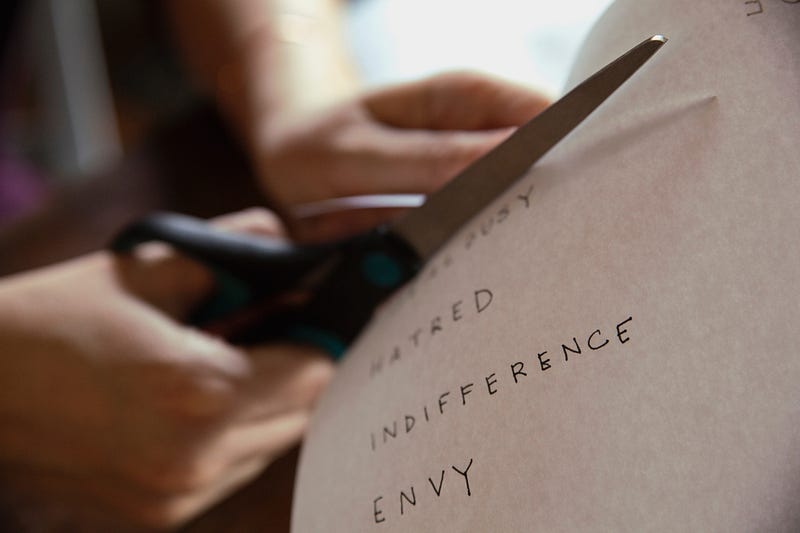 People who can’t stand to see the success of others will never experience their own.
The Nile flows more than a thousand miles without receiving the waters of a single tributary. The consequence is that it grows no greater as it courses over that vast line. Other rivers are every now and then receiving converging streams from the right and left. Thereby their volume continually increases until they reach the seas.
The
happiness of humans is like the flow of water in a river. If we enjoy
nothing but what is our own, our tiny rivulet of contentment, so far
from increasing, grows smaller by degrees, until it sinks unseen into
the sand. It leaves us in a desert of despair. On the other hand, when
all the acquisitions of our neighbors go to swell its bulk, our
enjoyment will flow like a river enriched by many affluents. Growing
ever greater as life approaches its close.
What is envy?
Envy is a pain or uneasiness, arising from an apprehension of the prosperity and good fortune of others; not because we suffer for their welfare, but merely because their condition is bettered.
It is a mysterious and terrible disease. The nerves of sensation within the envious are attached by some unseen hand to their neighbors all around. Every step of advancement which they make tears the fibers that lie next to their heart. They enjoy a moment’s relief when the mystic cord is temporarily slackened by their neighbor’s fall. Their agony immediately begins again, for they anticipate another twitch as soon as the fallen is restored to prosperity.
Envy is the most stupid of vices for there is no single advantage to be gained from it. — Honore de Balzac
- Like the wild tornado which, as it sweeps along, destroys the loveliest flowers, and leaves the garden desolate as the wilderness, it has cut down many a youth of promise and turned many a peaceful home into a scene of sadness and distress.
- The happiness of others is poison to the envious. The odious passion of envy torments and destroys one’s self, while it seeks the ruin of its object. Beware of envy. We know not to what it tends.
- Envy corrodes our inmost being so that we can enjoy no comfort whatever, while we are under its malignant influence.
- Envy is a leaven that sours and corrupt and is the bane of all that is good and beautiful and desirable in life.
- Envy everywhere is a fruitful cause of strife. Most contentions in the society are somehow usually connected with envy.
- A fretful, envious and discontented spirit is its own punishment. It consumes the flesh and makes the countenance pale.
- No passion that can possess the soul is more imperious and agitating, and consequently more injurious to health than envy.
Socrates
called envy the soul’s saw and wished that the envious had more eyes
and ears than others, that they might have more torment by beholding and
hearing others’ happiness.
Envy everywhere
The physician envies another physician more learned or more successful. The lawyer envies another lawyer. The fashionable person who seeks admiration or flattery on account of accomplishment or beauty envies another who is more distinguished and more successful in those things. And so the poet envies another poet and the orator, another orator. The statesman, another statesman.
The physician envies another physician more learned or more successful. The lawyer envies another lawyer. The fashionable person who seeks admiration or flattery on account of accomplishment or beauty envies another who is more distinguished and more successful in those things. And so the poet envies another poet and the orator, another orator. The statesman, another statesman.
3 Signs of envy
The
fact is, that so odious is this principle in the estimation of the
whole world, that there is not to be found on earth a person who will
acknowledge oneself to be actuated by it. Though the real truth is, most
of us are under its baneful influence.
- When we find ourselves averse from doing a person good offices.
- When we are pleased with the evil of others.
- When we manifest a censorious disposition. Silencing the good actions of others, or exposing the bad.
The cure of envy is not only a deliverance from pain but also, an unspeakable gain. They
will speedily grow rich who get and put into their bag not only all
their own winnings but also all the winnings of their neighbors.
The correction of all envy is “love.” If we loved others. If we rejoiced in their happiness, we should not envy them.
If
we are sensible how little improvement we have made of the talents
already committed to us, we shall see at once how little reason we have
to envy others their increased responsibility.
It is called forth by the honor or advantages which another enjoys above ourselves. Now if those advantages are merited, why should we grudge the person the possession of them?
It is called forth by the honor or advantages which another enjoys above ourselves. Now if those advantages are merited, why should we grudge the person the possession of them?
If
we try to make a right judgment of our own worth and abilities, we
shall find that there are others in the world at least as wise and as
good as we are but not endowed with as much honor as we are.
Monday, 11 December 2017
Today— All Good and Great Things Are Possible.

Whatever
is to come out of today exists in today. The future is not a revolution
but an evolution. Today is the child and heir of yesterday; tomorrow
will be the child and heir of today.
A day, what is it? A space of light between two mountain walls of darkness. Wonderful and rich, far beyond the line of our usual appreciation, is the gift of a day. Write it on your hearts today will be a great day and it will be.
A day, what is it? A space of light between two mountain walls of darkness. Wonderful and rich, far beyond the line of our usual appreciation, is the gift of a day. Write it on your hearts today will be a great day and it will be.
Today-time
present! This is really all we can call our own. Yesterday is like a
closed book. Its record is finished. The mill cannot grind with the
water that is past, so our work cannot be done with the strength and
opportunities of yesterday. Tomorrow. You never know. It may never come!
Today’s Work.
Riches
may fly away, fame may vanish, but duty never ceases. This saves our
lives from most of its perplexities. Are we happy? Let not our felicity
make us falter in the performance of a single duty, for on these duties
that happiness itself depends. Are we unhappy? Strenuously try not to
grieve over the bitterness, for action is the surest of solaces. In
every case, we cannot do better than obey the brave old rule, “Do the next thing.”
In the life of today are the results of the labor and struggle of all the yesterdays. No day is poor and commonplace. Every day is full of marvel and joy. Every day has its comedies and tragedies. Genius does not invent, it discovers and interprets.
In the life of today are the results of the labor and struggle of all the yesterdays. No day is poor and commonplace. Every day is full of marvel and joy. Every day has its comedies and tragedies. Genius does not invent, it discovers and interprets.
Who
has the pleasant, consciousness of being useful? The worker. Who stores
up the rich memories of many things done? The worker. Who sleeps
sweetly? The worker. Who relishes his food more than the epicure? The
hard worker. Who enjoys leisure? Those who use time so industriously
that they have earned a right to be idle. Who can understand the full
measure of blessing in a day? Those who have so earnestly pursued its
opportunities that its minutes are to them as gems, and its hours as
diamonds.
There
is great work yet to be done on this planet, continents to be
reclaimed, oceans to be navigated, acres of brains to be tilled.
Today’s Opportunities.
Each
day has not only its own immediate gifts but also its immediate
opportunities. Pluck the blossom of today. Opportunity is the flower of
time, and as the stalk may remain when the flower is cut off, so time
may remain with us when an opportunity is gone. To those who walk
through the world with open eyes every day reveals something beautiful.
An
opportunity has hair in front. Behind it is bald. If you seize it by
the forelock, you may hold it, but if suffered to escape, you will never
catch it again.
We are putting yesterday to its noblest use when we are using its experience to make the life of today better. We are preparing for tomorrow in the truest way when we are striving with all our might to be faithful to the opportunity of today.
We are putting yesterday to its noblest use when we are using its experience to make the life of today better. We are preparing for tomorrow in the truest way when we are striving with all our might to be faithful to the opportunity of today.
Today’s Time.
What shall we say of them who waste what no gold can buy? Time is the most precious thing in the world. Use time while you have it, for by and by there will be no more present time. A moment once lost, is lost forever. It is easier to find hot water under cold ice than to find a lost moment. Infinite results depend upon what we do with our time. The lazy waste the most precious commodity in this world. The consequences of failure are so supremely tragic, and the tendency to procrastination so universal, that action is demanded now, today. There is no better time than now to do.
Today’s Challenges.
Every
day has its own challenges. These must be met with patient
cheerfulness, and each problem taken care of as it comes. To add to the
difficulties and troubles of the present day by worrying about what
tomorrow might bring will not ease the situation confronting you now. To
restrict all care to the moment when it begins to nag is to conquer it
absolutely.
How much good is omitted, how many evils caused, how many duties neglected, how many good works destroyed, how many truths suppressed by those timorous forecasts of what may happen and those apprehensions concerning the future!
Do your work today with the strength you used to expend in carrying troubles which you borrowed from the future. Our task today is not to have the strength needed for tomorrow’s burdens.
Today is all we have.
There may never be a tomorrow for any of us. Let us look at our life from this point of view, not gloomily, or remorsefully, but as sensible men and women who can look at the truth in the face.
There
are those who live heedlessly absorbed in pleasure without any definite
aim or aspiration, free from anxiety because they are free from all
serious thoughts. There are also those who are careless for the morrow because they are careful for today.
Sunday, 10 December 2017
The Sneaky Way Negative Self-Talk Can Feel Productive
 Self-criticism has a sneaky superpower: It can often disguise itself as self-reflection.
When we come up short on something—say, that presentation at work, that friend we keep ghosting, or that promise we didn’t come through on—we can easily start blaming ourselves, replaying our mistake and upping our anxiety with each revisit. The worst part: We often feel like it’s a productive way to learn from the experience. In reality, though, we’re just tangoing with negative self-talk.
So, how do we truly have a moment of self-awareness? We cut the blame. At it’s best, self-awareness is a judgment-free zone. It comes from a place of curiosity, not shame. And it’s a pretty important skill to master if we want to live a fulfilling life.
The Power of Self-Awareness
Studies show that being self-aware comes with big benefits. People who understand themselves and how others view them are happier, make smarter decisions, have better personal and professional relationships, are more creative, and are more confident, according to Tasha Eurich, Ph.D., an organizational psychologist and author of the book Insight.Eurich hails self-awareness as the “meta-skill of the twenty-first century.” And it makes sense: When we’re self-aware, we’re able to use our actions, beliefs, and feelings as a compass to point us in the right direction.
Self-awareness and self-reflection help us learn what makes us happy, what makes us sad, what’s fulfilling, what’s not, and what’s just “meh”. And being curious about how we feel—or how our actions make us or others feel—can help us improve and make the right decisions as we journey onwards. But it’s easier said than done.
When Self-Criticism Sneaks In
Anxiously ruminating on our thoughts and feelings can often feel like a dip in the self-awareness pool—but it’s more a dip in murky waters. Thinking about ourselves doesn’t always mean we’re getting a better understanding of ourselves.“The act of thinking about ourselves isn’t necessarily correlated with knowing ourselves,” Eurich writes. “And, in a few cases, [researchers] found the opposite: the more time the participants spend in introspection, the less self-knowledge they have.”
The reason: Eurich explains that we often get hooked on “why” questions when we start introspecting, and studies show that type of introspection can have a negative impact.
Asking “why” (“Why am I so upset?” “Why aren’t I happy?” “Why the hell did I do that?) can cause us to fixate on our problems and place blame rather than reviewing our experiences in a productive way.
Ask 'What' Not 'Why'
So, how do we become self-aware without weighing ourselves down in “Why this?” “Why that?” thinking? Eurich suggests we ask ourselves “what” instead of “why.”Eurich explains in Insight:
“Why questions can draw us to our limitations; what questions help us see our potential. Why questions stir up negative emotions; what questions keep us curious. Why questions trap us in our past; what questions help us create a better future.”
When we ask ourselves “what” questions—like “What’s going on?,” “What am I feeling?,” or “What’s another way to see this situation?”—we’re able to gain some distance from our emotions and see our situation from a new perspective. In doing this, we can leave self-blame behind and start to objectively see the takeaways from our experience.
“Asking what could keep us open to discovering new information about ourselves, even if that information is negative or in conflict with our existing beliefs,” Eurich explains.
Head to the Balcony for a Better View
Another tactic to help you better self-reflect: Go up to the balcony. Not literally, of course, but figuratively. Eurich says it’s helpful to analyze the good and the bad from “multiple angles,” and when we mentally “go to the balcony,” we’re able to look at our situation from the perspective of a more objective observer.The next time you’re reviewing a difficult situation, try heading to the balcony.
It’s a tactic that can work when we reflect on both positive and negative experiences. In negative situations, it can help us cut through worry and fear to get to the learnings from our experience—the things we’ll actually carry with us as we move forward in life.
The next time you’re reviewing a difficult situation, try heading to the balcony and asking yourself one of these questions Eurich shares in Insight:
●︎ What opportunities can I find?
●︎ What about my weaknesses could be strengths?
●︎ When I look back on my life or career, what successes have I had in my most trying situations?
●︎ What is one gift I’ve gotten from my most challenging personal or professional relationship?
Self-awareness isn't easy, but it's a skill worth mastering. If we take a moment to observe our experiences—whether from the balcony or with the help of "what" questions—we can step away from self-blame and step into the power of self-awareness and self-insight. Then, we can move from thinking about ourselves to knowing ourselves—without negative self-talk getting in the way.
Source
Subscribe to:
Posts (Atom)